• Skip to primary navigation
  • Skip to main content
Velocity Ascent

Velocity Ascent

Looking toward tomorrow today

  • Research
  • Design
  • Development
  • Strategy
  • About
    • Home
    • Who we work with…
      • Product Leaders
      • Innovation Teams
      • Founder-Led Organizations
    • Services
    • Contact Us
  • Show Search
Hide Search

the Blog

Fintech in Focus: AgenticAI is changing the Innovation Landscape.

velocityascent · November 29, 2024 ·

Ultimately, the human remains the final decision-maker, ensuring accountability and contextual judgment in critical scenarios.

The fintech and hedge fund sectors thrive on innovation, but adopting new technology comes with its own risks and responsibilities. Measured adaptation—like gradually integrating Agentic AI—allows organizations to innovate while maintaining stability and trust. In this post, we explore how emerging technologies, ethical considerations, and novel strategies are transforming the financial world.

What is Agentic AI?
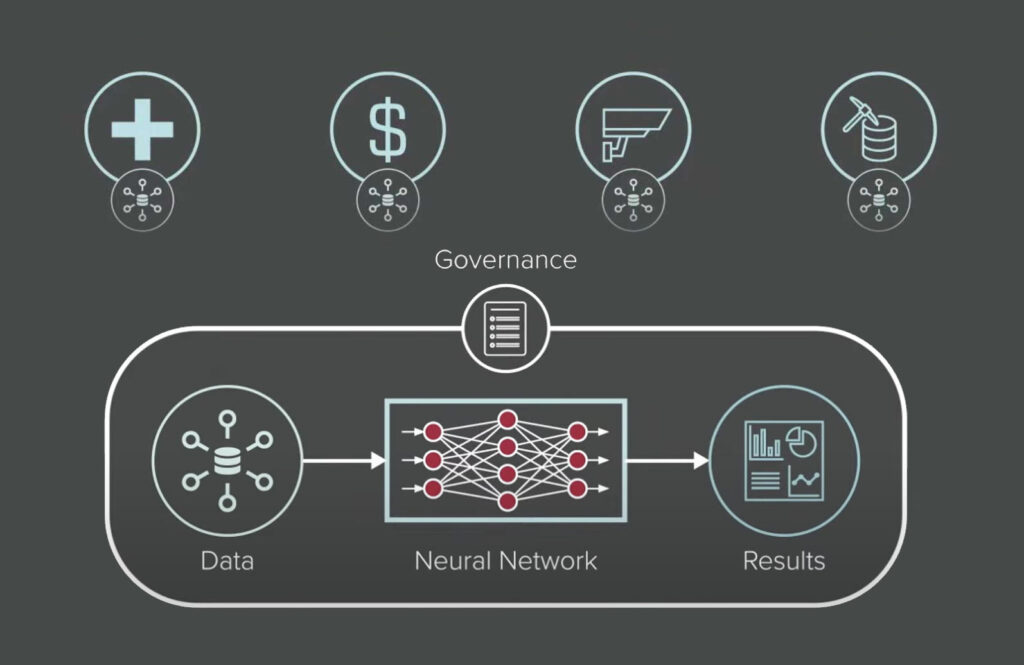
Agentic AI refers to artificial intelligence systems designed to operate as autonomous agents that can analyze data, make decisions, and execute tasks with minimal human intervention. In fintech, Agentic AI can be used to create “digital twins” of team members—virtual replicas that simulate human decision-making in a closed environment that enhance productivity and collaboration. By using Twins, companies can streamline routine and mundane processes, freeing the team members to focus more energy on mission and innovation.
Ultimately, the human remains the final decision-maker, ensuring accountability and contextual judgment in critical scenarios.

1. Emerging Technology: Driving the Next Wave of Financial Innovation

  • AI-Powered Insights:
    Hedge funds like Two Sigma have embraced machine learning to analyze non-linear relationships in market data, helping them outperform traditional quant models. The measured integration of AI ensures algorithm reliability before full-scale deployment.
  • Blockchain Beyond Bitcoin:
    JPMorgan’s blockchain platform, Onyx, facilitates secure, efficient interbank payments. This cautious adoption of blockchain technology focuses on specific, scalable use cases instead of speculative ventures.
  • Quantum Computing:
    Although still in its infancy, quantum computing firms like D-Wave are collaborating with financial institutions on experiments in portfolio optimization. A measured approach involves using quantum technology for supplementary analyses rather than replacing conventional models.
  • Edge Computing & Real-Time Decision Making:
    Nasdaq’s use of edge computing allows for microsecond-level trade execution while maintaining centralized oversight to prevent errors.

2. Ethical and Privacy Concerns in a Hyperconnected World

  • Data Privacy and Usage:
    Apple’s differential privacy model showcases how firms can analyze aggregated user data without compromising individual identities. Fintech companies could adopt similar anonymization techniques for customer analytics.
  • AI Bias and Fairness:
    A study showed racial biases in credit scoring algorithms. By slowly rolling out AI with robust testing frameworks, companies like FICO are working to ensure fairness without jeopardizing operational efficiency.
  • Cybersecurity Threats:
    Hedge fund Citadel’s investment in zero-trust architecture highlights the importance of assuming all network traffic is potentially compromised and taking preventive measures accordingly.
  • ESG Metrics:
    BlackRock’s use of Aladdin Climate software ensures portfolios meet ESG benchmarks without compromising returns. The gradual introduction of such tools avoids alienating traditional investors.

3. Emerging Investment Strategies: Navigating a New Era

  • Sustainable Investing:
    The rise of renewable energy ETFs demonstrates how measured allocations to green portfolios can balance innovation with risk management.
  • Alternative Data Sources:
    Hedge funds like Renaissance Technologies have leveraged satellite imagery for crop yield predictions. However, their success lies in testing alternative data methods on historical datasets before integrating them into live strategies.
  • Decentralized Finance (DeFi) Opportunities:
    Aave offers decentralized lending protocols. Firms that explore DeFi cautiously by using small experimental funds can gain early insights without exposing significant capital.
  • Hybrid Models:
    Morgan Stanley’s AI-supported human advisors showcase the value of combining machine efficiency with human intuition. Gradual integration ensures customers retain trust in the personal touch.

Conclusion: Adapting to the New Normal

The future of fintech and hedge funds lies in measured innovation. Technologies like Agentic AI offer transformative potential, but thoughtful integration is key to sustainable success. Leaders who embrace change with calculated steps will shape the next chapter of financial excellence.

Next steps…
How will you measure your steps in the journey toward innovation? Our approach is process based and responsive. Let’s discuss.


Addendum: Live Links to Examples

  1. Two Sigma: AI and Machine Learning
  2. JPMorgan Onyx Blockchain Platform
  3. D-Wave Quantum Computing
  4. Nasdaq and Edge Computing
  5. Apple’s Differential Privacy Model
  6. FICO and Fairness in AI
  7. Citadel and Zero-Trust Architecture
  8. BlackRock Aladdin Climate Software
  9. Renewable Energy ETFs
  10. Renaissance Technologies
  11. Aave’s DeFi Protocols
  12. Morgan Stanley AI Advisors



Fashion Tech: The Present Future of Fashion and Technology

Joe Skopek · October 14, 2024 ·

From “Sketch to Storefront” to AI assisted workflows, the blend of fashion and artificial intelligence is creating limitless possibilities and opening untapped opportunities.

Emerging technology has repeatedly transformed the fashion industry, driving innovation across garment production, retail, and consumer experiences. Just as the sewing machine revolutionized garment-making, today’s machine learning and AI are redefining fashion circularity, optimizing production, enhancing personalization, and streamlining recycling processes.

Technology has dramatically reshaped the fashion industry at key moments.

The sewing machine of the 19th century revolutionized garment production by making it faster, more precise, and accessible to a wider audience through mass production. Its most significant impact was the dramatic reduction in production time for creating garments.

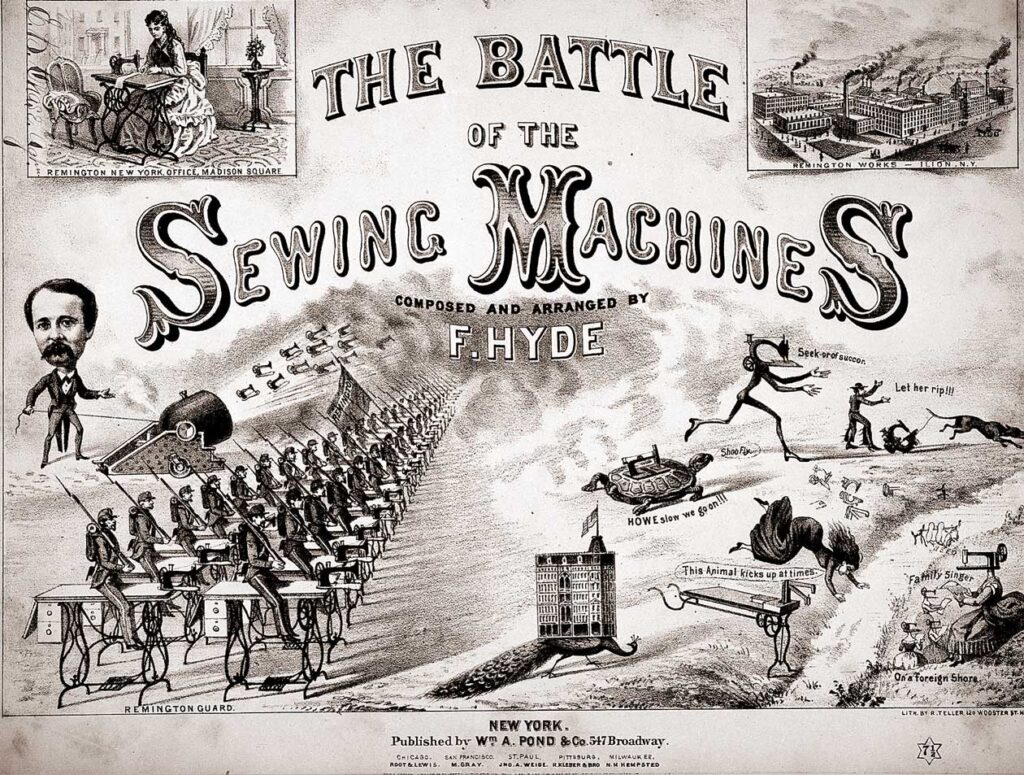
“The Battle of the Sewing Machines” was composed and arranged by F. Hyde for the piano, and was published in 1874. In this image the Remington “army” is marching towards the fleeing Singer, Howe, Succor, Weed, and Willcox & Gibbs sewing machines. 

This increased efficiency led to lower costs, making fashion accessible to a wider audience. Additionally, the sewing machine enabled the standardization of sizes and styles, resulting in more consistent quality and fit. This was a crucial development that laid the groundwork for ready-to-wear fashion.

The increase in precision offered by sewing machines allowed designers to experiment with intricate patterns and styles, pushing the boundaries of creativity. The ability to produce clothing efficiently contributed to the rise of fashion houses and brands, which ultimately paved the way for the modern fashion industry.

Just as sewing machines revolutionized garment making by replacing hand sewing, AI assistance is now streamlining digital production by automating repetitive or mundane tasks once performed by humans.

Creating an uninterrupted digital path from production to consumer.

The rise of e-commerce in the late 1990s revolutionized shopping, with platforms like Amazon and ASOS making fashion more accessible online. This shift pushed traditional retailers to adapt, while fueling the rapid growth of computer-based production solutions, digital marketing and social-driven sales.

Shortly after being introduced social media became a powerful tool with Fashion industry as a leading user, reshaping brand-consumer interactions and marking the beginning of the digital influencer in fashion marketing.

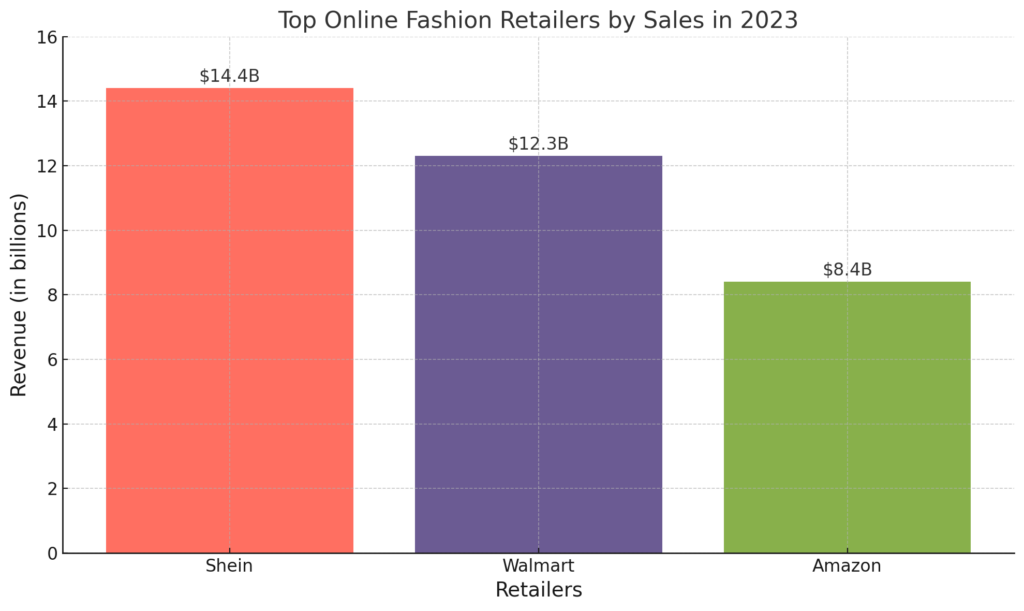
As of 2023, the top three online fashion retailers by sales are Shein, Walmart, and Amazon. Shein leads the market with $14.4 billion in fashion revenues, followed closely by Walmart with $12.3 billion. Amazon, though dominant in various sectors, now ranks third in the fashion space, generating $8.4 billion in 2023. These platforms excel by offering a combination of convenience, affordability, and extensive product assortments.

Traditional brick-and-mortar fashion retailers like Nike, H&M, and Inditex (Zara) have solidified their positions as industry leaders by seamlessly blending their physical store presence with innovative digital strategies, leveraging e-commerce to expand their reach and maintain their market dominance.

As of 2023, brick-and-mortar fashion retailers with strong online sales include:

  1. Nike – Nike leads in both physical and online sales, thanks to its innovative digital strategies such as the Nike App and its direct-to-consumer (DTC) model, which bridges the gap between in-store and online experiences.(A)
  2. H&M – Known for its fast fashion, H&M continues to thrive with a robust online presence, coupled with its global store network. Its focus on e-commerce has helped it remain competitive in the digital era.
  3. Inditex (Zara) – Zara‘s parent company, Inditex, is a major player in both physical and online retail, offering seamless integration between its brick-and-mortar stores and digital platforms, contributing to its top rankings.

Bricks-and-Mortar fashion news: Vogue Business – What Lies Ahead for Brick-and-Mortar Luxury in 2023: Placer.ai

These brands effectively combine their in-store experiences with digital innovations to maintain leadership in both arenas.

The Nike App is an example of Nike’s commitment to innovative digital strategies that go deep. Ready-to-use advice and feature stories on everything from Nike pros to neighborhood teams.

Currently, artificial intelligence has introduced a new era of personalized fashion, with AI tools helping designers analyze trends, streamline production, and create customized shopping experiences through virtual fitting rooms and styling algorithms. At the core of the customized shopping experience is “hyper-personalization”; the use of advanced data, AI, and analytics to deliver highly tailored bespoke experiences that meet individual customer preferences in real time.

Browzwear and LaLaLand.ai are two leading tools in fashion tech.

Each wave of technological advancement has redefined the fashion landscape, pushing the industry toward greater creativity, accessibility, and sustainability. With the growing focus on circularity in fashion, technology is now enabling brands to design for longer product lifecycles, reduce waste, and embrace sustainable practices like recycling and upcycling.

This shift, alongside innovations in AI, 3D printing, and smart textiles, is driving the industry toward a future where sustainability and circularity are core to fashion’s evolution.

Browzwear and LaLaLand.ai are redefining how fashion is created, marketed, and consumed.

Much like the sewing machine did during the Industrial Revolution, Browzwear Browzwear and LaLaLand.ai are redefining how fashion is created, marketed, and consumed. The sewing machine revolutionized garment production by increasing efficiency and allowing for mass production – these modern tools are streamlining design processes and enhancing collaboration in today’s fashion industry.

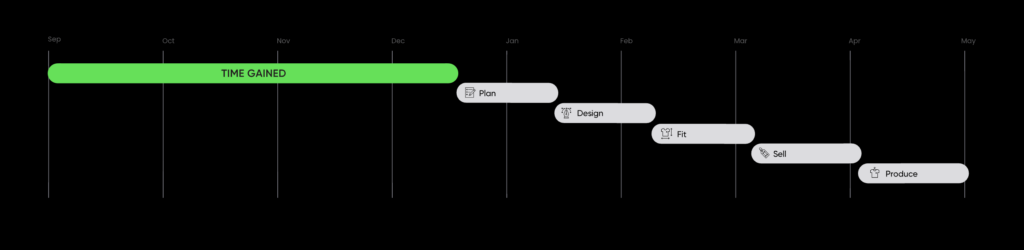
The sewing machine enabled designers to produce clothing more quickly and affordably, making it accessible to a broader audience. Similarly, Browzwear and LaLaLand.ai are fostering innovation and sustainability by reducing reliance on physical samples and promoting digital solutions. They have created a “Sketch-to-Storefront” digital workflow that takes all aspects of the production cycle and supply chain into account. This shift not only minimizes waste but also allows brands to respond swiftly to market demands and trends.

Browzwear’s 3D fashion design software, reduce days of iterations and reach market faster. The apparel digital twin visualizes and validates every detail, the first physical sample is the only sample.

Moreover, just as the sewing machine transformed individual craftsmanship into a collective industry effort, these technologies enhance creativity and representation in fashion. By enabling diverse designs and virtual models, they contribute to a more inclusive fashion landscape. In essence, the impact of these contemporary tools parallels the profound changes initiated by the sewing machine, driving the fashion industry toward a more innovative, sustainable, and accessible future.


Quantum Computing: A Primer for the Modern Enterprise

velocityascent · September 17, 2024 ·

Data and Customer Insights, Campaign Optimization and Predictive Analytics.

Quantum computing is no longer just a distant technological dream; it’s on the verge of reshaping entire industries. For forward-thinking executives, especially those leading marketing and growth strategies, understanding quantum’s impact is critical. This technology will revolutionize how businesses interact with data, optimize decisions, and innovate for the future.

Quantum: The Shift from Classical Computing

The true power of quantum computing lies in its ability to solve complex problems exponentially faster than classical systems. With qubits operating in superposition, quantum computers can simultaneously explore a multitude of solutions, enabling breakthroughs in data processing, machine learning, and optimization problems that would have otherwise been unattainable.

For organizations, this means opening the door to more effective decision-making, enhanced personalization, and business models that were previously unimaginable.

Transforming Marketing Strategy with Quantum

Quantum computing offers revolutionary potential in three major areas:

  1. Data and Customer Insights: Quantum’s ability to process massive amounts of data in parallel could soon transform data analytics. Marketers will be able to achieve real-time segmentation and deliver hyper-personalized experiences based on more granular insights.”Quantum-enhanced AI will redefine the depth and speed of consumer analytics, enabling truly real-time decision-making in marketing strategies.”
    — Smith, J., & White, R., MIT Media Lab, 2023
  2. Campaign Optimization: Today’s multi-channel campaigns are difficult to optimize due to the number of variables involved. Quantum computers can simulate and optimize these complexities in seconds, potentially leading to more efficient use of marketing budgets and higher ROI.”The precision and speed with which quantum systems handle optimization problems will allow businesses to rethink marketing operations and resource allocation.”
    — Brown, A., University of Oxford, 2022
  3. Predictive Analytics: Quantum computing will supercharge predictive models, offering more accurate and actionable insights about future trends, behaviors, and risks. Imagine the ability to forecast customer needs well before they even arise.”In fields like pharmaceuticals, quantum simulations are accelerating discovery and shortening time-to-market. This same principle can be applied to business analytics, speeding up predictive modeling.”
    — Nguyen, K., University of Toronto, 2021

The Next Three Years: Quantum and Business Impact

The next three years will mark the tipping point for quantum adoption. Forward-thinking organizations will start experimenting with quantum in niche applications like supply chain management, fraud detection, and advanced marketing analytics. While fully functional quantum computers are not expected to dominate until later in the decade, the businesses that begin exploring partnerships and building the foundational infrastructure now will be the ones leading when the technology hits its stride.

Executives should consider how quantum computing fits into their long-term strategic vision. Integrating it into advanced AI models, optimizing customer engagement, and ensuring more efficient workflows are just the beginning.

Quantum computing isn’t just for tech geeks anymore—it’s about to become your best marketing ally.

Here’s a refined version of the blog post, with pull quotes from the academic references, followed by a worksheet for your next meeting.


The Quantum Computing Revolution: A Primer for the Modern Enterprise

Quantum computing is no longer just a distant technological dream; it’s on the verge of reshaping entire industries. For forward-thinking executives, especially those leading marketing and growth strategies, understanding quantum’s impact is critical. This technology will revolutionize how businesses interact with data, optimize decisions, and innovate for the future.

Quantum: The Shift from Classical Computing

The true power of quantum computing lies in its ability to solve complex problems exponentially faster than classical systems. With qubits operating in superposition, quantum computers can simultaneously explore a multitude of solutions, enabling breakthroughs in data processing, machine learning, and optimization problems that would have otherwise been unattainable.

“Quantum-enhanced AI will redefine the depth and speed of consumer analytics, enabling truly real-time decision-making in marketing strategies.”
— Smith, J., & White, R., MIT Media Lab, 2023

For organizations, this means opening the door to more effective decision-making, enhanced personalization, and business models that were previously unimaginable.

Transforming Marketing Strategy with Quantum

Quantum computing offers revolutionary potential in three major areas:

  1. Data and Customer Insights: Quantum’s ability to process massive amounts of data in parallel could soon transform data analytics. Marketers will be able to achieve real-time segmentation and deliver hyper-personalized experiences based on more granular insights.
  1. Campaign Optimization: Today’s multi-channel campaigns are difficult to optimize due to the number of variables involved. Quantum computers can simulate and optimize these complexities in seconds, potentially leading to more efficient use of marketing budgets and higher ROI.
  1. Predictive Analytics: Quantum computing will supercharge predictive models, offering more accurate and actionable insights about future trends, behaviors, and risks. Imagine the ability to forecast customer needs well before they even arise.

The Next Three Years: Quantum and Business Impact

The next three years will mark the tipping point for quantum adoption. Forward-thinking organizations will start experimenting with quantum in niche applications like supply chain management, fraud detection, and advanced marketing analytics.

“The precision and speed with which quantum systems handle optimization problems will allow businesses to rethink marketing operations and resource allocation.”
— Brown, A., University of Oxford, 2022

While fully functional quantum computers are not expected to dominate until later in the decade, the businesses that begin exploring partnerships and building the foundational infrastructure now will be the ones leading when the technology hits its stride.

“In fields like pharmaceuticals, quantum simulations are accelerating discovery and shortening time-to-market. This same principle can be applied to business analytics, speeding up predictive modeling.”
— Nguyen, K., University of Toronto, 2021

Executives should consider how quantum computing fits into their long-term strategic vision. Integrating it into advanced AI models, optimizing customer engagement, and ensuring more efficient workflows are just the beginning.

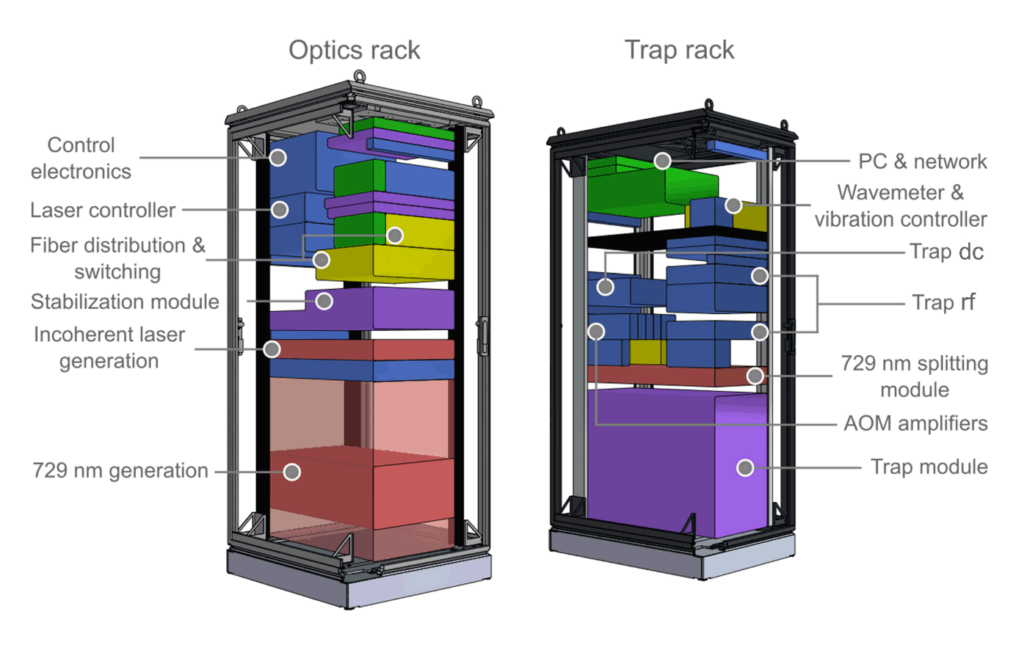
Simplified scale model of quantum computing demonstrator housed in two 19-inch racks.

Quantum Computing Implementation Worksheet

Use this worksheet to guide a time-release strategy for quantum integration within your organization. This sample of a structured approach helps to prioritize initiatives and ensure that quantum’s value is realized in alignment with your broader business goals, our results may vary.

PhaseTimelineKey ActionsExpected Outcomes
Phase 1: Exploration0-6 months– Research quantum computing basics and assess its potential in key business areas.
– Identify departments (e.g., IT, R&D, marketing) that could benefit from quantum use cases.
– Build partnerships with quantum technology firms and academic institutions.
– Quantum literacy within the team.
– Initial identification of potential quantum applications.
Phase 2: Pilot Programs6-18 months– Implement small-scale pilot projects to test quantum solutions (e.g., advanced data analysis, optimization algorithms).
– Monitor pilot results and assess the business value.
– Establish key metrics for quantum integration (e.g., ROI, efficiency improvements).
– Proof of concept for quantum applications.
– Early-stage performance metrics.
Phase 3: Strategic Integration18-36 months– Expand quantum computing applications based on pilot successes.
– Integrate quantum algorithms into business processes (e.g., AI models, customer analytics).
– Begin scaling quantum-based solutions organization-wide.
– Optimized marketing and operational processes.
– Long-term competitive advantages.
Phase 4: Quantum-Driven InnovationBeyond 36 months– Leverage quantum technology to innovate new products/services.
– Maintain leadership in the quantum-driven business landscape.
– Industry-leading innovation.
– Established reputation as a quantum-powered business.

Key Considerations for Quantum Adoption

  1. Partnerships: Collaborate with academic institutions and tech providers to stay updated on quantum advances.
  2. Talent Development: Invest in quantum computing training and hire specialized talent to manage and integrate these systems.
  3. Infrastructure Readiness: Prepare your IT infrastructure to handle quantum data flows and integrate with classical systems.
  4. Market Positioning: Begin positioning your brand as a leader in quantum technology to gain early mover advantage in your industry.

By focusing on a gradual, strategic implementation plan, organizations can effectively harness the power of quantum computing to drive innovation and long-term growth.


References:

  • Smith, J., & White, R. Quantum AI: The Frontier of Marketing Analytics, MIT Media Lab, 2023.
  • Brown, A. & Green, P. Quantum Optimization in Business Applications, University of Oxford, 2022.
  • Nguyen, K., & Patel, S. Quantum Simulations for Drug Discovery, University of Toronto, 2021.

Reality Check: Federated Agentic and Decentralized Artificial Intelligence

Joe Skopek · September 12, 2024 ·

AI is evolving rapidly, and a new approach is gaining momentum: agentic AI. Unlike current tools like ChatGPT, which require human input to operate, agentic AI is designed to act independently – monitoring competitors’ marketing efforts, scheduling real-time content updates, or predicting real-world equipment needs – without waiting for instructions. As these systems take on more autonomy, robust security measures become essential to ensure their actions remain safe, aligned, and trustworthy.

MIT Media Lab – Ramesh Raskar: A Perspective on Decentralizing AI

“A.I. co-pilots, assistants and agents promise to boost productivity with helpful suggestions and shortcuts. “

New York Times, September 2024

While this technology is still in the early stages, it’s being hyped as the next big thing in AI, promising to boost productivity and innovation. However, we’re not there yet – agentic AI is mostly a vision for the future that’s rapidly approaching.

Governance Challenges: Accountability, Regulation, and Security

Governance issues with Agentic AI and decentralized computing stem from a lack of centralized control, making regulation and enforcement difficult across jurisdictions. In decentralized systems, no single authority oversees operations, while in Agentic AI, autonomous decisions raise questions about accountability, such as who is responsible when things go wrong – developers, users, or the AI itself.

Ethical and legal compliance is a significant challenge, as both agentic AI and decentralized systems often operate beyond traditional frameworks, making it difficult to ensure they adhere to laws or ethical guidelines.

Security is another concern. Decentralized systems may suffer from vulnerabilities due to inconsistent protocols, while agentic AI can be manipulated or exhibit harmful behaviors. Existing regulatory frameworks are frequently outdated, creating oversight gaps for these emerging technologies.

Both technologies also face issues with coordination and standardization. Decentralized systems require consensus among many participants, which can slow progress, and agentic AI currently lacks widely accepted standards.

Finally, the lack of transparency in AI decision-making, combined with the difficulty of auditing decentralized systems, further complicates governance and accountability.

This is where Federated Machine Learning offers a compelling solution.

Federated Machine Learning (FedML)

FedML is an approach that enables organizations with limited data – so-called “small data” organizations – to collaboratively train and benefit from sophisticated machine learning models. The definition of “small data” depends on the complexity of the AI task being addressed.

In Pharma, for example, having access to a million annotated molecules for drug discovery is relatively small in view of the vast chemical space.

In Marketing that small data set might be in the form of brand specific visual data – brand guidelines scattered across PDFs, emails, and shared drives.

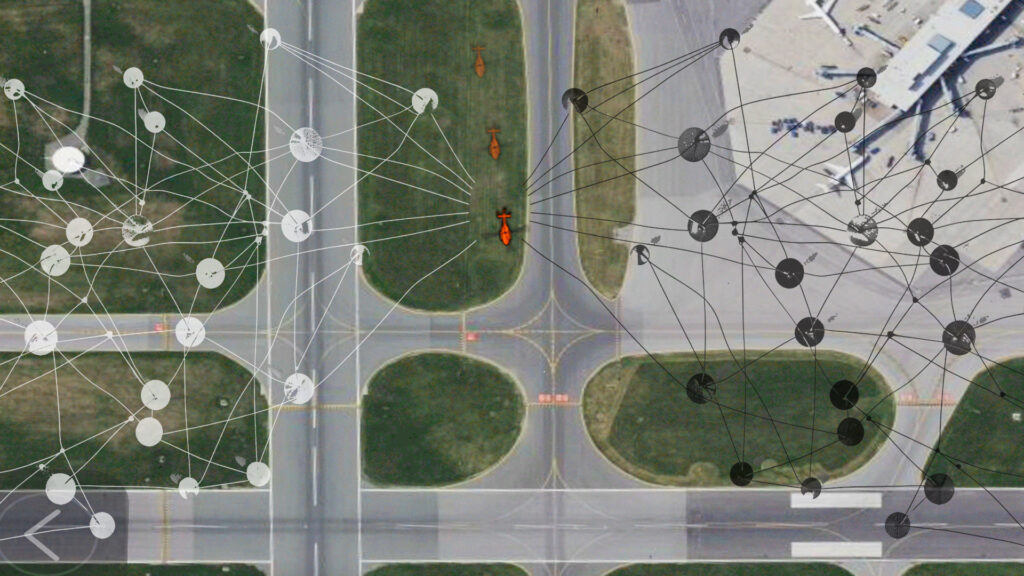
Image: Jing Jing Tsong/theispot.com

Is Federated Agentic AI the answer?

Federated Agentic AI refers to a blend of two advanced AI concepts: federated learning and agentic AI.

Federated learning enables AI models to be trained across decentralized devices or data sources while keeping the data local and secure, thereby enhancing privacy and scalability. Meanwhile, agentic AI refers to self-contained systems that, once implemented by humans, operate autonomously around the clock. These systems are capable of controlled decision-making and can adapt based on real-time data without further human intervention.

When combined, Federated Agentic AI allows multiple autonomous agents to collaborate across a secure distributed network. These agents can handle tasks independently while continuously learning from local data sources, without needing to share sensitive information across the network. This setup is particularly useful in environments like healthcare, finance, or IoT, where data privacy is critical but complex tasks still require intelligent automation.

For instance, a federated agentic system might be deployed in a network of smart devices where each device autonomously manages specific tasks (e.g., thermostats optimizing energy use) while learning from local data (e.g., weather conditions). These devices can also share insights without revealing user data, improving overall system efficiency and privacy​.

Final Thoughts: Designing for new technology is a completely different challenge from a traditional design project.

Typically, users already know how to interact with familiar products – like swiping a credit card at a payment terminal or using a TV remote to change channels. But with emerging technology, there are no familiar cues, making it harder for users to figure out how to engage with it effectively. Think back to when users first encountered smartphones – there was no clear precedent for touchscreens or gestures, making it challenging to learn entirely new interactions.

Adoption of new tech often lags behind confusion and speculation, so creating a seamless, intuitive user experience is essential for success.

That said, designing something entirely new isn’t easy – but it’s exactly where the team at Velocity Ascent excels. We navigate the space between excitement for emerging technology and the need to deliver real, secure, user-centered value. By following key principles, we transform unfamiliar tech into products that people and teams love to work with.

For CMOs, this means a potential shift in how to approach marketing and customer engagement. As AI becomes more autonomous, the question will be: how do we control and guide these powerful tools to enhance our strategies while still ensuring privacy? Ultimately it is about using AI in smarter, more effective ways to drive business growth.

Sources:

Analytics Vidhya, The GitHub Blog

MIT Media Lab: Decentralized AI Overview

A Perspective on Decentralizing AI

Generative AI: Revolutionizing Video & Image Production

Joe Skopek · August 30, 2024 ·

Video & Imagery Production is undergoing a seismic shift, thanks to the arrival of advanced AI technologies like Midjourney and Runway.

The workflow of video and image production is undergoing a seismic shift, thanks to the merging of advanced AI technologies like Midjourney v6.1 and Runway Gen-3. This powerful combination is more than just a technical marvel; it’s a transformative tool for marketing agencies, revolutionizing the way they approach video content creation.

Accelerating Production with AI Synergy

For marketing agencies, the need to produce high-quality video content quickly and efficiently is paramount. The integration of Midjourney v6.1 and Runway Gen-3 offers a solution by streamlining the pre-production process. These tools allow creators to visualize and animate storyboards at an unprecedented pace, reducing the time it takes to move from concept to final product.

This speed and flexibility mean that agencies can handle more projects simultaneously, increasing their output without sacrificing quality. By automating time-consuming tasks, AI enables teams to focus on refining creative ideas rather than getting bogged down in the technical aspects of production.

Our Experimentation:

We conducted several dozen tests and reviewed numerous articles and papers online to evaluate the integration of Generative AI in early-stage storyboard development for videos and its impact on agency workflows. The results were eye-opening.

Source Image Creation:

For this experiment, the creative brief required the following: the image must include a group of friendly seniors smiling around a smartphone at a picnic table in the summer, during golden hour. The first attempts were promising, and after a few subtle adjustments to the prompt, we began to achieve ‘realistic’ results close to stock photography.

Early experiment generating a group of Seniors.

A good start, but the image looked a bit too ‘Princess Bride,’ with colors that were far too saturated. While it’s possible to use the SREF in Midjourney and a color palette from Adobe Color to color grade your Midjourney imagery, we opted for a more hands-on approach. We created a custom color range tailored to our target, resulting in improved color balance and a higher degree of ‘believability.’ Much of the effort went into refining the output.

Array of images generated during refinement.

Our second goal was to enhance the appearance of the seniors. Initially, they appeared, forgive the ageism, too old for our demographic requirements. Finally, we adjusted the prompt to eliminate unwanted artifacts, such as seniors holding two phones instead of one and glasses melting into the table.

Final image chosen for use in video storyboard.

The final image did more than achieve the creative brief baseline requirements – it created a “feeling”. You can almost feel the warmth of a late summer day and the joy of the gathered Seniors. With the image and prompts finalized our next step was to move over to Video Gen.

Video Generation:

Since we would just be using AI Video Generation as a storyboard and not for broadcast we ran the first series as “vanilla prompts”. This allowed us to quickly generate action that could be placed in the storyboard sample with lots of room for feedback and adjustment.

Early stage test of AI Generative Video

Our initial tests yielded the expected otherworldly creations; the video starts off normally but quickly spirals into a surreal, science fiction fever-dream with all but one of the Seniors sliding into oblivion. Applying a revised prompt set and rethinking the scene resulted in a new direction more in line with the requirements.

Late stage test of AI Generative Video

The results are nothing short of fascinating, the motion is smooth and the Seniors appear to be in a natural setting acting normally. There are still some anomalies that are fine-tuned out of the finished video. For example in the sample video above you will notice on the left side of the scene the smartphone morphs into the pint glass. A few more edits to the prompt will resolve this.

Given the time and resources typically needed for custom video production or extensive research across stock agencies, the speed of this process is remarkably faster. Even more exciting is that we are only at the dawn of this technology.

Cost Reduction and Enhanced Creative Output

The financial benefits of this AI-driven approach are significant. By reducing the time and resources required for video production, agencies can lower costs for their clients while delivering even more compelling content. This efficiency opens up opportunities for smaller businesses to access high-quality video production, which was previously only within reach of larger companies with bigger budgets.

Moreover, the enhanced creative capabilities of these AI tools allow for rapid prototyping and experimentation. Agencies can quickly test and iterate on ideas, ensuring that the final product aligns perfectly with the client’s vision. This ability to fine-tune creative concepts on the fly is a game-changer for marketing campaigns, where the margin for error is often slim.

While AI can automate certain aspects of video creation, it lacks the nuanced understanding of brand voice, audience preferences, and emotional resonance that only human creators can bring.

The Human Element: Essential and Irreplaceable

Despite the incredible advancements in AI technology, the human element remains crucial in the production process. While AI can automate certain aspects of video creation, it lacks the nuanced understanding of brand voice, audience preferences, and emotional resonance that only human creators can bring.

The role of the human in this AI-driven workflow is to guide and shape the creative direction, ensuring that the content not only meets technical standards but also connects with viewers on a deeper level. AI tools serve as powerful assistants, augmenting human creativity but never replacing it. This collaboration between human ingenuity and machine efficiency is where the true potential of AI in video production lies.

Transforming the Advertising and Entertainment Industries

The impact of this AI merging extends beyond marketing agencies to the broader advertising and entertainment industries. The ability to rapidly prototype ideas and create high-quality visual content democratizes the production process, making it accessible to a wider range of creators, from seasoned professionals to enthusiastic hobbyists.

As this technology continues to evolve, we’re likely to see a shift in how visual media is consumed and interacted with. The lines between imagination and realization are becoming increasingly blurred, allowing for more immersive and personalized storytelling experiences.

Impact on Traditional Video Production:

AI tools are transforming video production by automating many aspects of the process, such as editing, special effects, and even scriptwriting. This automation can greatly speed up production timelines and reduce costs, enabling agencies to produce more content with fewer resources. For smaller teams or independent creators, AI provides access to high-quality production tools that were once out of reach.

However, this increased efficiency could lead to a reduction in the demand for certain roles, such as video editors, animators, and even directors. As AI becomes more sophisticated, the need for manual intervention in repetitive or technical tasks will decrease, potentially leading to job losses in these areas.

Impact on Stock Agencies:

AI-generated content also poses a challenge to traditional stock agencies. With AI tools capable of creating high-quality images, videos, and even audio, the reliance on stock libraries may diminish. Creators can now generate custom content tailored to their specific needs without having to sift through existing libraries. This shift could reduce demand for traditional stock footage and images, impacting the revenue streams of stock agencies.

Potential Job Losses:

While AI has the potential to displace certain jobs, it’s important to recognize that it also creates new opportunities. Jobs focused on AI tool development, data analysis, and AI integration into creative processes will likely grow. Additionally, roles that require a high degree of creativity, strategic thinking, and emotional intelligence—skills that AI currently cannot replicate—will remain essential.

The key for professionals in the industry will be to adapt to these changes by learning to work alongside AI, using it as a tool to enhance their capabilities rather than viewing it as a replacement. Those who can harness the power of AI to augment their creativity and productivity will find new opportunities in the evolving landscape of video production and stock media.

The importance of the human touch in this process cannot be overstated.

The Future of Storytelling

The future of video production is here, and it’s powered by AI. For marketing agencies, embracing this technology means not only staying competitive but also pushing the boundaries of what’s possible in creative content creation.

However, the importance of the human touch in this process cannot be overstated. As we move forward into this new era of AI-driven production, the collaboration between human creativity and AI efficiency will be the key to unlocking new levels of innovation and storytelling.

  • « Go to Previous Page
  • Page 1
  • Page 2
  • Page 3
  • Page 4
  • Page 5
  • Page 6
  • Interim pages omitted …
  • Page 8
  • Go to Next Page »

Velocity Ascent

© 2026 Velocity Ascent · Privacy · Terms · YouTube · Log in